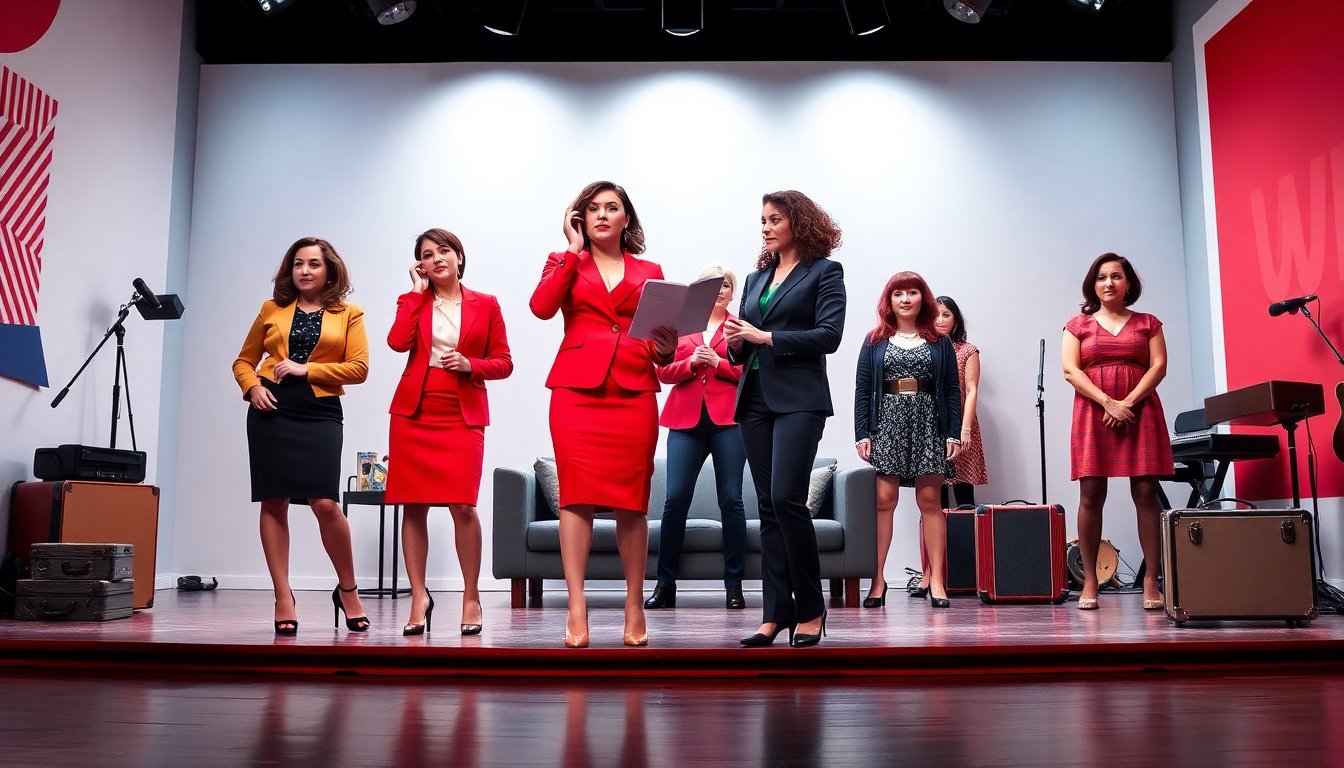
Women on the Verge of a Nervous Breakdown musical adapts Pedro Almodóvar’s film into a stage show. The musical keeps the film’s dark humor and frantic pace. It uses sharp dialogue, bright melodies, and retro-pop arrangements. The piece presents women who react to love, betrayal, and survival. It aims to entertain and probe emotional truth with wit and punch.
Key Takeaways
- The Women on the Verge of a Nervous Breakdown musical faithfully adapts Pedro Almodóvar’s film, combining dark humor with vibrant musical styles to explore themes of love, betrayal, and resilience.
- The musical showcases strong female leads whose songs reveal inner thoughts, driving character development and emotional depth throughout the fast-paced plot.
- Its score blends pop, flamenco, and theatrical elements, using catchy melodies and vivid lyrics to enhance both comedy and heartfelt moments on stage.
- Successful productions emphasize sharp pacing, clear scene transitions, and dynamic staging to balance the show’s tone and engage modern audiences.
- Casting actors skilled in both comedic timing and pop vocals is essential to capture the musical’s unique blend of wit and emotional honesty.
Background and Origins: From Almodóvar Film to Stage Musical
Pedro Almodóvar wrote and directed the original 1988 film Women on the Verge of a Nervous Breakdown. The film gained praise for its bold visuals, comic timing, and female-focused plot. Producers later saw stage potential in the film’s plot and characters. They hired playwrights and composers to adapt the story for live theater. The musical version preserves Almodóvar’s humor and character-driven scenes while adding song to state inner life. The adaptation teams aimed to keep the film’s spirit and update its pacing for modern audiences. They layered pop and theatrical styles to match the film’s vibrant mood. The musical first reached audiences in the 2010s and then toured internationally. Critics noted the adaptation’s faithfulness and its new musical identity.
Plot Overview and Key Characters
The musical follows a group of women linked by a single man’s actions. The protagonist plans to confront betrayal and finds chaos instead. Each scene moves quickly and flips tone from comic to sincere. The plot keeps the film’s episodic structure and adds musical numbers to reveal motive and memory. Songs punctuate turning points and accelerate the plot. The central themes include abandonment, resilience, and female friendship.
Main Characters and Their Dramatic Arcs
Pepa leads the story. She copes with a breakup and tries to find answers. Candela supports Pepa and faces her own crisis. Iván drives conflict offstage through his relationships. Lucia struggles with career and romance and finds new strength. Marisa appears as a foil and reveals social pressure. Each woman sings to show inner thought and to move from confusion to action. The ensemble amplifies the comic timing and lifts emotional beats. The characters grow by confronting truth and by relying on each other.
Music, Songs, and Musical Style: What Makes the Score Tick
The score blends pop, flamenco touches, and theatrical motifs. Composers write catchy hooks and emotionally direct ballads. The music supports quick scene changes and tight choreography. Songs use repetition and clear motifs to anchor themes. The musical places upbeat numbers at comedic highs and slow songs at emotional lows. Arrangements use guitars, piano, brass, and percussion for a warm, lively sound. The lyric lines favor short phrases and vivid images. This approach keeps the audience engaged and makes motives easy to follow. The showbook calls for vocal leads who can sell both humor and feeling. The band embraces dynamics that shift from intimate to full-throttle. Directors often choose bright staging to match the score’s color. Critics cite the score’s balance of wit and heart as a key strength. The music turns film interiority into immediate stage presence.
Production History, Notable Productions, and Reception
The musical opened in regional and international theaters after workshop runs. Early productions tested pacing and scaled scenes for different stages. A London production drew attention for strong female leads and bold design. A later U.S. run refined orchestration and comedic timing. Touring companies adjusted choreography to fit venue constraints. Reviews praised performances, set design, and faithful adaptation of the film. Some critics noted that tone shifts require tight direction to work. Audiences responded to the show’s humor and emotional honesty. Award nominations followed in several markets for acting and design. Producers later mounted revised versions to tighten the book and rework a few song placements. Casting choices often favored actors with both comic timing and pop vocal skills. The musical now appears regularly in professional and community theaters. Directors emphasize clear scene transitions and brisk pacing to maintain energy. This strategy helps the piece succeed with modern viewers.