attribution = 9093599187, 2108073820, 3147884096, 2317360708, 1800807138, 2177711746, 4175127674, 296710892, 3175994071, 3236942461, 3465377499, 2136175900, 2246031411, 2039023073, 4087694839, 3142381406, 3234170238, 3478924674, 3656510160, 3608903319, 2602640487, 3606338409, 2405129519, 2504487407, 3192262386, 3017668708, 3056308990, 4022828076, 3462992463, 3096476342, 4152001748, 4159077030, 4243324062, 2408362119, 4044601987, 2135682687, 2102440850, 2136372262, 4073620259, 2487805555, 3135528147, 4174146399, 3612233030, 3618833962, 2136472862, 2392272721, 2406214782, 2567998987, 2059304300, 2294364671, 3213571060, 2259605392, 3479980831, 3035783310, 4167790381, 4022654186, 2406183584, 254660473, 4122611113, 2369996990, 4073571232, 2678656550, 2085223380, 4074340350, 3364816040, 4074695056, 2486291821, 2262140291, 4046894739, 3175672312, 2027411816, 4197016020, 3232867352, 2702863302, 2674784230, 2153832005, 282948295, 290633000, 2172413376, 4186518975, 3056697600, 4017702162, 2483853044, 291578981, 2063091307, 3475361942, 3055042737, 4048366329, 4162438300, 3523134600, 466454837, 2818243575, 4233521028, 4094074011, 2135682397, 102000, 2816679193, 3465478338, 2504100485, 3333446972, 2127351777, 1300771445, 3175393085, 3854250824, 2067022783, 2105817562, 3056768795, 4023873054, 3302485241, 4102378665, 2142831548, 3044515041, 3212442698, 3472620322, 3122340075, 4084783472, 3238094132, 4053210600, 3232080131, 2062740146, 3122798256, 4164913757, 4232505230, 2812042960, 434462755, 2022554965, 485814207, 2533737999, 1300308930, 3043889677, 4196173004, 4045852022, 3473923734, 4055295811, 3108619653, 2029907799, 2065573021, 2105723295, 2014679077, 3213483031, 4155698601, 4155917768, 3174565049, 3472199390, 4103141283, 4102954148, 4102377291, 4028082750, 2284603133, 2164244412, 2107872680, 2014658491, 3092705002, 2193122647, 2159292828, 4178836105, 3035022434, 2162734654, 3028313529, 2816662973, 2394325100, 2564670430, 3474681916, 3852966667, 4052173481, 3377148175, 2164422271, 4234408609, 2036948405, 4157272451, 3172263803, 3606265627, 4134472210, 2232371574, 2124760905, 4127333029, 3612325759, 4243078870, 511715700, 1300569658, 2406162255, 4023544230, 3145972044, 2534140345, 2152674966, 4086763310, 2816729670, 1800290955, 4075897105, 3126039300, 3128185252, 4059365622, 4075503605, 410151233, 3142938339, 3057972039, 2566966212, 3054251151, 4194522210, 4178156806, 4243459294, 2066918065, 2482312102, 2056058455, 4129306001, 3129268400, 2104051767, 3125866463, 3144515166, 4123635100, 2062215000, 2293558031, 2677423489, 2069443619, 3476676790, 3092984438, 3143906829, 2106255353, 2108176611, 2694888911, 359099033, 3103596094, 4184251145, 2059836124, 2566995271, 469825611, 3853788859, 2013458667, 2564650082, 2629998017, 3607610751, 3093283873, 3618277126, 3053634432, 3309844654, 2103184431, 2538442114, 3142938351, 2487808888, 2487808000, 2068062976, 4186595264, 3039807300, 4244758274, 2293529412, 2192333004, 3127577226, 2057938193, 2044870273, 4105163434, 3375414115, 3324560547, 4143007144, 3475353347, 3476142512, 4088349785, 3026232525, 2164894062, 4055833012, 2106401949, 4125385947, 3176220219, 2075485013, 4059009569, 3234056440, 4075989078, 4236701657, 2065826344, 3175504434, 2013453296, 4049052125, 2093407814, 4235644999, 2562802948, 3043672103, 4057192128, 4122055113, 2055107151, 2162640873, 3058240637, 4052131206, 468332150, 3238090208, 480025932, 2396892871, 3462995617, 4075472741, 2406842101, 2292073091, 3307757296, 3132933287, 4169004465, 3364386490, 2076077881, 3023341002, 1300650840, 3106450444, 3093008063, 2817678438, 3475125010, 4055542143, 2813240539, 3232051816, 4077076010, 2169573250, 3475353009, 3233725078, 2149323301, 1300553576, 1300368710, 4012372163, 291984300, 2105808378, 3062060161, 386844371, 2129419020, 3193177008, 4055786075, 4107533411, 4045513952, 4029398325, 3035323582, 2093324588, 2674580255, 4036483300, 4057085048, 4028759298, 3059670629, 4015610060, 2629487300, 4053537113, 2159882300, 3463962051, 3176425016, 405688983, 2074804252, 4052766025, 4169413721, 4073372694, 4052121439, 3852617186, 3179165150, 2692313137, 282295864, 3137364771, 3606265636, 2107872346, 4197412007, 2185010385, 3609023336, 1800268829, 4028759097, 3143264395, 2092553045, 2029496897, 2152673938, 389039235, 3212496914, 2487806000, 3605239052, 285039897, 3214664094, 1300466859, 2199474151, 2134411102, 2507703120, 2199348320, 3146188768, 299760447, 4252952037, 4234451528, 3054712254, 2138351235, 4132849160, 2107144030, 2814540101, 3175672496, 420450064, 2693011676, 3047699880, 4074340362, 3054231817, 2392951691, 3044547065, 2533722173, 4077536423, 385650014, 2032853009, 2672232367, 1888472222, 2672935009, 3055089854, 3239048799, 3372437711, 3528355302, 2137405131, 3303689046, 2699324082, 3236067842, 4062205416, 3612362252, 4073159167, 2158952821, 3122655687, 3323222559, 3054238938, 4236961408, 2096458266, 4236961439, 3013028464, 2814078523, 3465779311, 2405707976, 493795330, 392774000, 2315630778
Tuesday, October 20, 2026
No Result
View All Result
NEWSLETTER
Thenervousbreakdown
  • Home
  • Mental Health
  • Productivity
  • Self Improvement
  • Motivation
  • Lifestyle
  • About Us
  • Contact Us
  • Home
  • Mental Health
  • Productivity
  • Self Improvement
  • Motivation
  • Lifestyle
  • About Us
  • Contact Us
No Result
View All Result
Thenervousbreakdown
No Result
View All Result
Home Latest Updates

The Future of Biomedical Research: How Scientific Discoveries Are Changing Our Understanding of Health

by Cian Hayes
in Latest Updates
The Future of Biomedical Research: How Scientific Discoveries Are Changing Our
Understanding of
Health

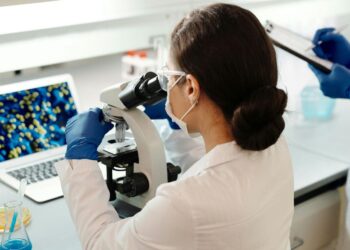
Medical research has come a long way in explaining how diseases develop and how treatments work. Advances in genetics, cellular biology, and immunology are now helping scientists investigate why the same condition can affect people differently.

These discoveries could lead to more targeted treatments. They also raise a practical question: how can researchers turn new scientific findings into safe, accessible care?

What a Diagnosis Doesn’t Tell Us

Two people can share a diagnosis but have different genetic characteristics, immune responses, and disease progression. Those differences can affect how they respond to treatment.

Biomedical researchers study these variations to understand what happens beneath the symptoms.

  • Genetic analysis helps identify changes associated with certain diseases.
  • Cellular biology reveals how cells behave and interact during illness.
  • Advanced diagnostics help identify biological markers that may influence treatment decisions.

These findings help researchers investigate disease mechanisms and explain why a treatment might work for some patients but not others.

Why the Same Treatment Doesn’t Work for Everyone

Cancer research shows how much individual biology matters. Tumors can differ in their genetic makeup, the proteins they produce, and the ways they interact with the immune system. Some also change over time, making treatment more difficult.

Personalized medicine accounts for these differences when researchers develop or select treatments. Examples include:

  • Genetic testing to identify mutations linked to specific treatment options.
  • Targeted medicines designed to act on particular biological features of a disease.
  • Immunotherapies that help the immune system recognize or attack cancer cells.
  • These approaches have already improved care for some patients, but they do not work for every cancer or every person. Researchers continue to investigate how individual biological differences can guide treatment more effectively.

    Helping the Immune System Recognize Cancer

    The immune system can identify abnormal cells, but cancer sometimes evades that response. Researchers are investigating ways to help immune cells recognize tumors more effectively.

    Dendritic cells are important to this work. They present antigens, or markers, that help the immune system identify what to target. This process can activate T cells, which may then recognize and attack cells carrying those markers.

    Researchers are exploring how to use dendritic cells in cancer vaccines. The aim is to help the immune system recognize features of an individual patient’s tumor.

    How Engineered Cells Could Change Cancer Research

    Stem cells give scientists a way to study cell development and investigate potential treatments. Induced pluripotent stem cells (iPSCs) are made by reprogramming mature cells into a stem-cell-like state. Researchers can then guide them to develop into specific cell types.

    A study published in Cell Stem Cell in August 2026 explored how this technology could support cancer immunotherapy. Researchers developed dendritic cells from engineered iPSCs and equipped them with information from tumor-associated antigens to help activate T cells.

    The work involved laboratory experiments using blood cancer and solid tumor samples, alongside an animal model in which tumor growth slowed.

    AIVITA Biomedical contributed ovarian cancer tumor material to help researchers test the approach against solid tumors.

    The findings offer an early proof of concept, not an established cancer treatment. More research is needed to determine whether the approach is safe and effective in people.

    Promising Research Takes Time

    A successful laboratory experiment does not automatically become a treatment. Researchers must establish safety, measure benefits, and compare results with existing options.

    Clinical trials help answer these questions. Early trials typically assess safety and dosing, while later studies examine effectiveness in larger groups.

    Cell-based therapies also present practical challenges:

    • Manufacturing: Cells must be produced consistently under strict quality controls.
    • Safety: Researchers need to monitor side effects and possible long-term risks.
    • Cost: Complex production can make treatments expensive.
    • Access: Hospitals and healthcare systems need practical ways to deliver new therapies.
    • Evidence: Studies must show meaningful benefits for patients, not just promising laboratory results.

    These steps help researchers distinguish an interesting discovery from a treatment that can genuinely improve patient care.

    What Comes Next for Biomedical Research?

    Several fields are expanding the questions scientists can investigate:

    • Genomic analysis helps researchers examine the biological changes associated with disease.
    • Artificial intelligence can identify patterns in large datasets for further study.
    • Cellular engineering allows scientists to explore new approaches to immunotherapy and regenerative medicine.

    Progress depends on collaboration among researchers, clinicians, biotechnology companies, and medical institutions. It also depends on affordability. A treatment’s potential is limited if patients cannot access it.

    Turning Discoveries Into Better Care

    Advances in genetics, immunology, and cellular engineering are giving scientists new ways to investigate disease and develop treatments. Research involving companies such as AIVITA Biomedical illustrates how these fields can come together to explore personalized approaches to cancer immunotherapy.

    The results still need rigorous testing before their value in clinical care can be established. That distinction matters: promising research creates opportunities, but reliable evidence determines whether those opportunities can benefit patients.

    The future of biomedical research will depend on both discovery and delivery. Scientists must continue asking new questions while ensuring that the answers lead to treatments that are safe, effective, and accessible.


    Previous Post

    How Dental Implants Restore Function and Improve Your Smile

    Related Posts

    How Can You Recognise Depression And Know When To Ask For Help?
    Latest Updates

    How Can You Recognise Depression And Know When To Ask For Help?

    by Cian Hayes

    Depression can affect almost every part of daily life, from your mood and sleep to your relationships, motivation and ability...

    Read moreDetails
    stones 19th nervous breakdown
    Latest Updates

    The Rolling Stones’ “19th Nervous Breakdown”: Story, Meaning, and Legacy (1966)

    by Cian Hayes

    The phrase stones 19th nervous breakdown appears early in the Rolling Stones' history. The band wrote the song in 1966....

    Read moreDetails
    19th nervous breakdown band
    Latest Updates

    19th Nervous Breakdown: The Rolling Stones’ Raucous 1966 Single That Defined a Moment

    by Cian Hayes

    The phrase "19th nervous breakdown band" appears in searches about the song and the group that played it. The Rolling...

    Read moreDetails
    Questions to Ask Before Selecting an HRT Clinic
    Latest Updates

    Questions to Ask Before Selecting an HRT Clinic

    by Cian Hayes

    The decision to take hormone therapy should not be made on the basis of price or availability of an appointment....

    Read moreDetails
    women on the verge of a nervous breakdown descargar
    Latest Updates

    How To Watch And Download “Women On The Verge Of A Nervous Breakdown” Legally In 2026

    by Cian Hayes

    The search term "women on the verge of a nervous breakdown descargar" appears in many queries. People want a legal...

    Read moreDetails
    women on the verge of a nervous breakdown streaming
    Latest Updates

    Where To Stream “Women On The Verge Of A Nervous Breakdown” In 2026 — Where To Watch, Rent, Or Buy

    by Cian Hayes

    The film Women on the Verge of a Nervous Breakdown streaming options change often. This guide lists where to stream...

    Read moreDetails

    Recommended

    Ian Vanek: The Punk Percussionist Who Paints with Chaos

    Ian Vanek: The Punk Percussionist Who Paints with Chaos

    Lindsay Hunter: Writing at the Edge of the Raw and Real

    Lindsay Hunter: Writing at the Edge of the Raw and Real

    Popular News

    • The Future of Biomedical Research: How Scientific Discoveries Are Changing Our
Understanding of
Health

      The Future of Biomedical Research: How Scientific Discoveries Are Changing Our Understanding of Health

    • How Dental Implants Restore Function and Improve Your Smile

    • How to Choose the Right Mental Health Provider

    • How to Reduce Dust at Home: Practical Steps for Cleaner Indoor Air

    • How Can You Recognise Depression And Know When To Ask For Help?

    thenervousbreakdown.com
    • Home
    • Privacy Policy
    • Terms & Conditions
    • About Us
    • Contact Us

    © 2026 TheNervousBreakdown.com – All Rights Reserved | Address:

    6894 Emberkeel Dr, West Pinewick, CO 80894

    No Result
    View All Result
    • Home
    • Mental Health
    • Productivity
    • Self Improvement
    • Motivation
    • Lifestyle
    • About Us
    • Contact Us

    © 2025 TheNervousBreakdown - All Rights Reserved