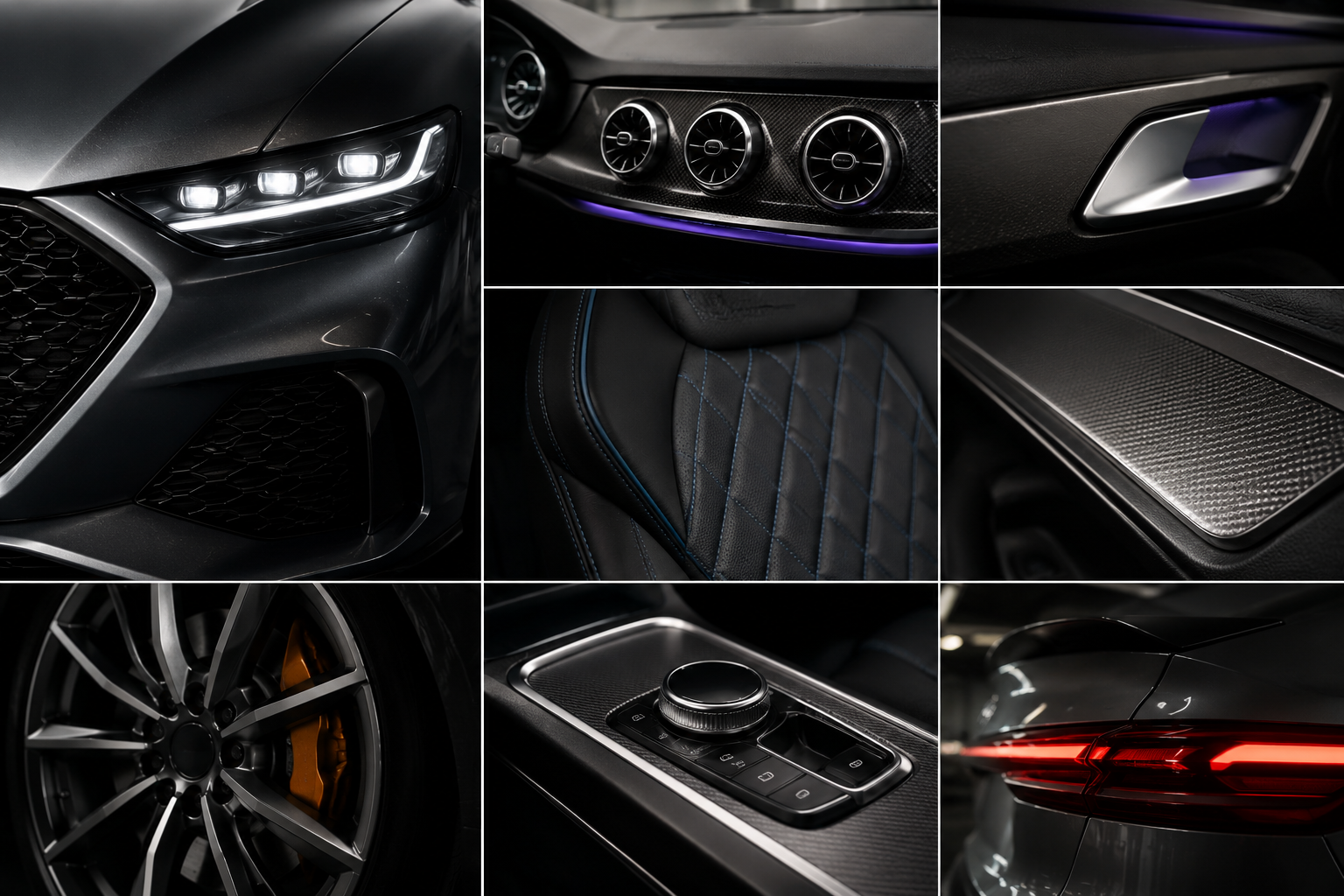
For decades, automotive design has been defined by big ideas. Horsepower figures, sweeping body lines, revolutionary engineering and headline-grabbing concept cars have traditionally dominated conversations about what makes a vehicle desirable. Yet in recent years, a quieter shift has been taking place across the industry. Increasingly, it is the smallest details that capture attention and shape perceptions.
From distinctive lighting signatures to carefully selected materials and personalised finishing touches, micro-design has become one of the most influential forces in modern automotive culture. These subtle elements may seem insignificant in isolation, but together they play a major role in how drivers connect with vehicles and how manufacturers differentiate themselves in an increasingly competitive market.
The Age of Visual Recognition
One of the clearest examples of micro-design's growing importance can be found in vehicle lighting.
Modern cars are often recognisable at a glance, even in darkness. Manufacturers invest heavily in unique LED daytime running light patterns, illuminated grilles and animated welcome sequences. In many cases, these features have become as important to brand identity as traditional badges or logos.
The rise of electric vehicles has accelerated this trend. Without the visual drama of large grilles or prominent exhaust systems, designers have sought new ways to create distinction. Lighting has become a powerful tool for establishing personality while also improving visibility and safety.
Consumers increasingly notice these details. A vehicle's lighting signature can communicate sophistication, sportiness or technological advancement before a driver even approaches the car.
Materials That Influence Perception
Micro-design extends well beyond exterior styling. Inside the cabin, materials and finishes often have a significant impact on how a vehicle is perceived.
Soft-touch surfaces, textured metals, contrast stitching and carefully selected trim materials contribute to an overall impression of quality. Even minor design choices can influence whether a cabin feels premium, modern or outdated.
Interestingly, perceptions of luxury are evolving. While traditional materials such as leather and wood remain popular, many consumers are embracing sustainable alternatives. Recycled fabrics, plant-based materials and environmentally conscious finishes are increasingly viewed as desirable rather than compromising.
This reflects a broader shift in automotive culture, where thoughtful design decisions often matter more than overt displays of luxury.
The Social Media Effect
The growth of automotive content on platforms such as Instagram, TikTok and YouTube has also elevated the importance of micro-design.
Vehicles are now consumed visually at a scale never seen before. Close-up photography, cinematic video content and detailed walkaround reviews encourage enthusiasts to focus on elements that might previously have gone unnoticed.
Wheel finishes, brake caliper colours, interior ambient lighting and exterior trim accents frequently become talking points online. What was once considered a minor design detail can quickly become a defining characteristic of a model.
This exposure has encouraged manufacturers to pay greater attention to the finer points of design. Every visible surface has the potential to appear in thousands of social media posts and videos, making consistency and attention to detail more important than ever.
Personalisation as Identity
The growing popularity of vehicle personalisation highlights another reason why micro-design matters.
Modern motorists increasingly view their vehicles as extensions of personal identity. While major modifications remain popular among enthusiasts, many drivers now prefer subtle customisation options that enhance individuality without dramatically altering the vehicle.
Factory styling packs, bespoke interior finishes, unique wheel designs and personalised exterior details allow owners to create vehicles that feel distinctive while maintaining everyday practicality.
Even relatively small additions can have a meaningful impact on a vehicle's character. This is one reason companies such as Number 1 Plates have attracted interest from motorists looking for finishing touches that complement broader personalisation projects through options such as 4D laser-cut plate designs.
Importantly, these choices are rarely about resale value or practicality. Instead, they reflect a desire for self-expression and ownership pride.
The Competitive Advantage of Attention to Detail
Manufacturers have recognised that micro-design can influence purchasing decisions just as effectively as traditional performance metrics.
Many vehicles within a particular segment now offer comparable levels of efficiency, safety and technology. As a result, consumers often make decisions based on emotional factors rather than purely rational comparisons.
A distinctive steering wheel design, an intuitive switch layout or a memorable lighting animation can create a stronger emotional connection than a marginal difference in performance figures.
This attention to detail is particularly important as automotive technology becomes increasingly standardised. When powertrains and digital features begin to converge, design becomes one of the most effective ways for brands to maintain individuality.
The Future of Automotive Detail
As vehicles continue to evolve, micro-design is likely to become even more influential.
Advances in digital interfaces, adaptive lighting systems, customisable displays and sustainable materials will provide new opportunities for manufacturers to create distinctive experiences. Artificial intelligence may even enable vehicles to adapt visual and sensory elements to individual driver preferences.
At the same time, consumers are becoming more design-aware. Exposure to online automotive communities and specialist content has created a market that appreciates nuance and craftsmanship in ways that previous generations may not have.
The result is an automotive landscape where small details can have a surprisingly large impact.
Conclusion
The modern automotive industry is increasingly defined by refinement rather than excess. While performance, technology and engineering remain important, it is often the smallest details that leave the strongest impressions.
Lighting signatures, material choices, personalised finishes and carefully considered design elements all contribute to how drivers experience and remember vehicles. These micro-design trends reflect a broader cultural shift towards individuality, craftsmanship and emotional connection.
In a market where differentiation is becoming more challenging, attention to detail is no longer a finishing touch. It has become a defining feature of automotive identity itself.